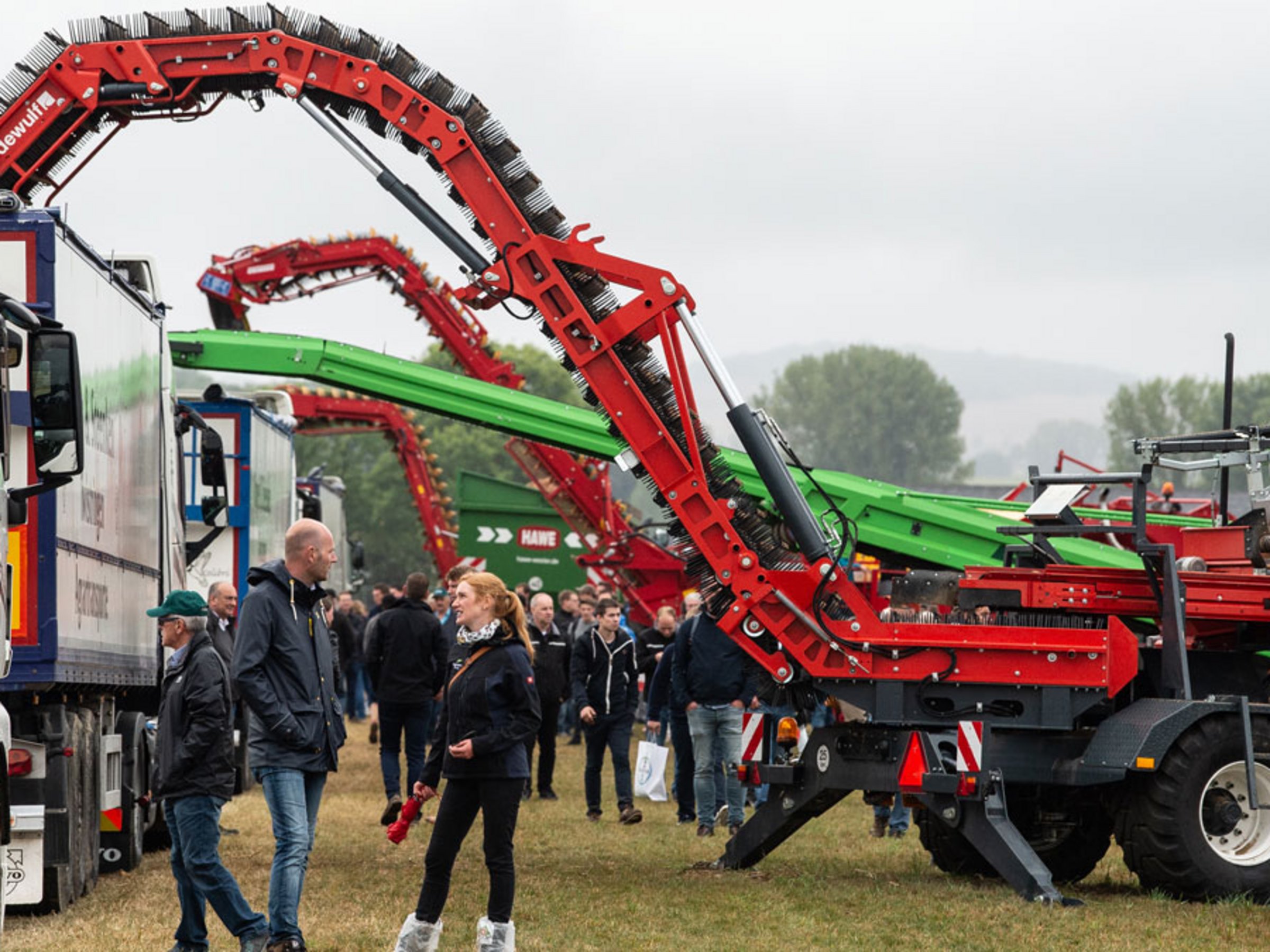

In the maintenance of potato crops on conventional farms, the current process design focusses on the optimal application of herbicides in the pre-emergence phase. The combination of planting and final ridging in a single pass allows the ridges to settle very well over a longer period of time. At the same time, similar to creating a "false seedbed", a large proportion of the weeds emerge from the upper soil layer, which can then be easily controlled shortly before the potato plants emerge. With today's crop protection sprayers and the widespread use of tramlines, high area outputs are ensured for on-time treatment and quality-preserving cultivation of only selected tramlines.
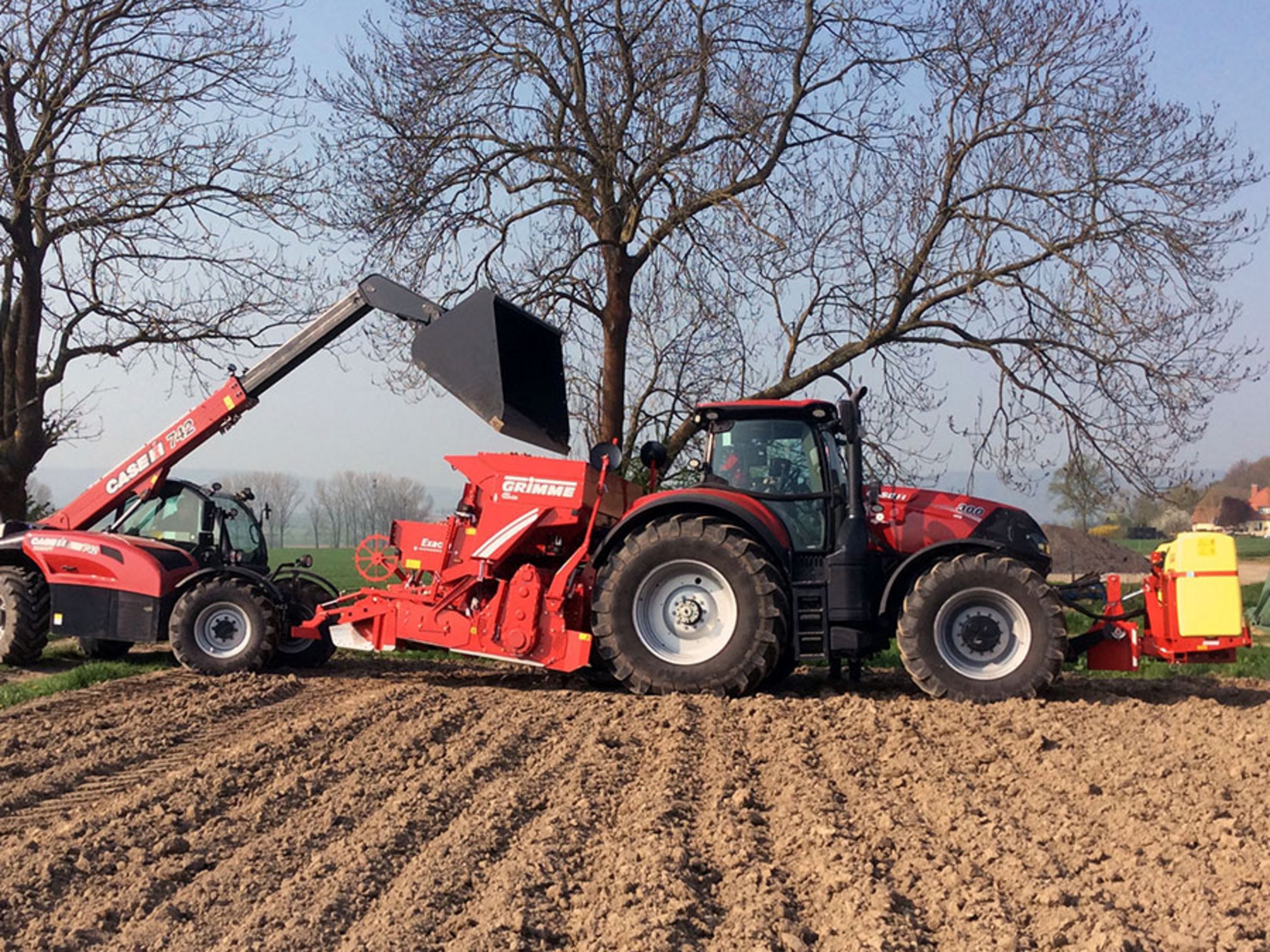
The advantages associated with this process design are still valid, but must increasingly be scrutinised due to the changing framework conditions. On the one hand, this concerns the expected expiry of the authorisation of the previously dominant active ingredient in various pre- and post-emergence herbicides and, on the other, the political objective of a significantly greater reduction in chemical crop protection in agriculture. The latter of course also affects potatoes and is relatively easier to realise in the care of potato crops than in the control of diseases and pests, such as the yield-critical late blight.
In the case of the potato as a classic root crop, the multiple cultivation passes used to perform the function of soil loosening, repeated weed control and gradual ridge building. Today, thanks to more powerful tractors, soil loosening and ridge building can also be carried out in a single pass, e.g. in combination with potato harrowing. This has meant that the further development of separate cultivation equipment has not been a particular priority for most manufacturers in recent decades.
Against this background, many farms still rely on a combination of harrowing and multi-stage ridging for mechanical cultivation in order to prevent the weeds from developing further by repeatedly tearing them loose and burying them. However, the intensive soil movement also encourages deeper-lying weed seeds to germinate, which then further increases the competitive pressure. A different approach is taken by maintenance equipment which, for example, uses contact wheel-guided knives or ridge mouldboards with fixed mouldboards to remove only a shallow layer of the previously built-up final ridge together with the weeds that have grown up there, leaving the underlying soil layers untouched.
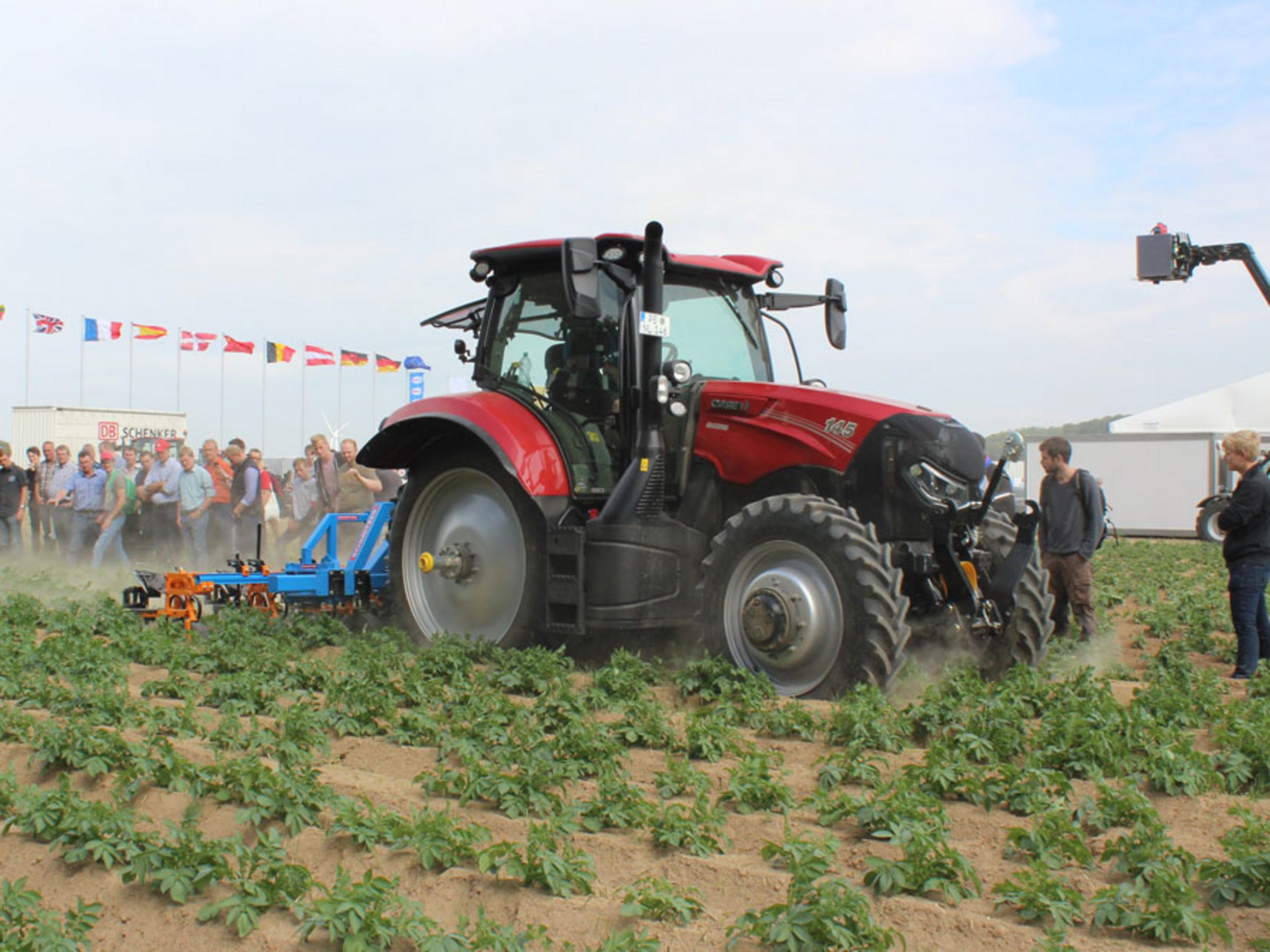
One challenge here, however, is to optimise adaptation to the shape of the ridge, which often varies from farm to farm. Although the ridge can be rebuilt in the same operation using trailing raking tools, it must be borne in mind that the preferred soil conditions for weed control and ridge construction are not the same.
While the sides of the ridge can be worked relatively well by the maintenance equipment available on the market, the crown area is much more difficult to keep weed-free, especially in the post-emergence phase. In addition to various harrow tools, differently designed finger discs are also used here. It may be possible to adapt other tools and techniques, e.g. from the vegetable sector, for this purpose in the future.
Due to their relatively slow juvenile development, the potato plants can only suppress the weeds sufficiently late, so that experience has shown that 1-2 cultivation passes are still necessary on many sites even after emergence. However, the above-ground development of the potato plants is accompanied by increasing root penetration of the ridge, which is all the more damaged by mechanical cultivation of the soil the more intensive and the later the intervention is carried out. This is then also reflected in the yield and sorting of the crop. In addition, many more furrows have to be repeatedly travelled than with chemical cultivation. This not only leads to increased soil compaction, but can also result in clod formation if conditions are too wet, the effects of which can be felt right up to harvest. Together with the increasing time pressure due to the growing area under cultivation, the desire for larger working widths has therefore increased significantly in practice. GPS-controlled planting favours the use of cultivation equipment with a working width greater than the number of rows of planters, as does the greater motorisation of today's cultivation tractors.